
When you apply for a home loan, vehicle loan or credit card, lenders may review your credit history and credit score. This is one factor in their decision; it does not guarantee approval or a particular interest rate.
This guide explains credit scores and reports, how to check them, how to build a credit history responsibly and what to do if a report contains an error.

1. What is a credit score?
A credit score is calculated by a credit information company using information about your credit accounts and repayment history. In India, scores commonly range from 300 to 900; people without a credit history may see codes such as NA or NH. The range and calculation can vary by bureau and scoring model.
When assessing a loan or credit-card application, a lender also considers income, existing debt, repayment capacity, documentation and its own policies.
How should you understand the score range?
A higher score can generally indicate a stronger credit history. Some lenders consider a score of 750 or above desirable, but labels for score ranges and approval criteria vary. No score guarantees approval or a lower rate.
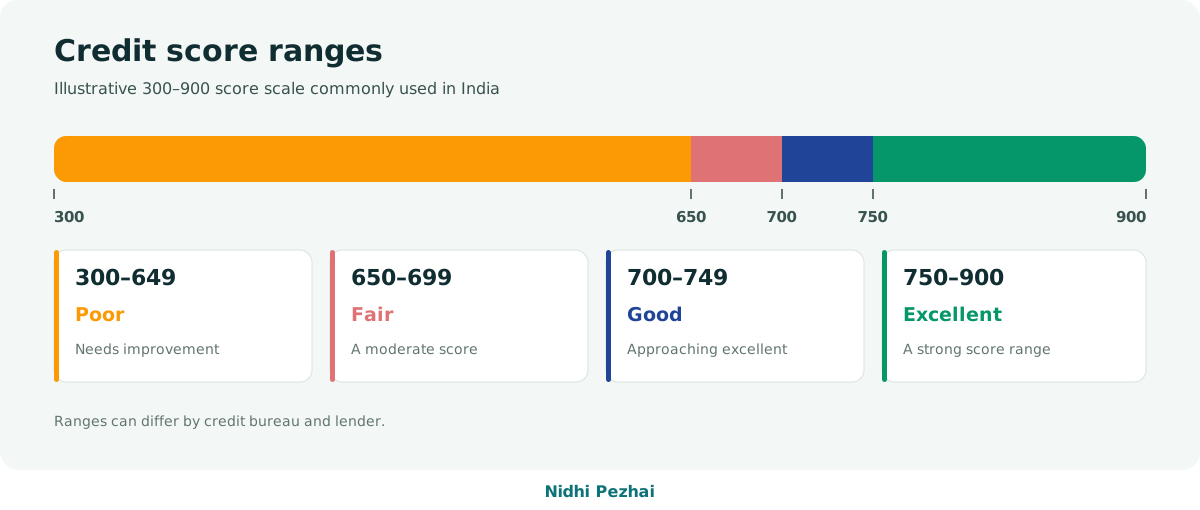
The Tamil diagram illustrates these categories: 300–649 poor, 650–699 fair, 700–749 good and 750–900 excellent. These labels are illustrative and can vary by bureau and lender.
2. Main factors that affect a credit score
- Repayment history: Paying EMIs and credit-card bills on time is important. Late or missed payments may be recorded and affect your score.
- Credit utilisation ratio: This measures how much of your credit-card limit you use. Lower utilisation can generally be favourable; keeping it below 30% is a common guideline, not a guaranteed rule for everyone.
- Length of credit history: The age of older accounts and continuity of your history may be considered.
- Types of credit accounts: A mix of secured and unsecured credit may be considered. Do not take unnecessary credit just to improve a score.
- New credit inquiries: A lender's hard inquiry when you apply for credit may appear on your report. Avoid many applications in a short period. Checking your own report is not a credit-application inquiry.
The precise weight of each factor depends on the bureau's scoring model; do not assume one percentage breakdown applies to all bureaus.
3. How can someone with no credit history start?
Someone starting their first job or who has never borrowed may see NA, NH, −1 or 0 instead of a score. Possible ways to build a history include:
- A secured credit card: Some banks offer a card backed by a fixed deposit. Eligibility, documentation and deposit requirements vary by issuer.
- Instalment credit for a planned purchase: An instalment facility for a phone or appliance may be reported to a credit bureau. Consider processing fees, lost discounts, late fees and the total cost, and use it only if the purchase was already planned and affordable. Do not borrow solely for a score.
- Co-borrowing or guaranteeing: Consider this only for a genuine shared need. Co-borrowers and guarantors may be responsible for repayment under the agreement, and the primary borrower's missed payments may affect their reports too.
4. How can you improve your credit score?
- Set up auto-debit: Arrange automatic payments for EMIs and credit-card bills, keep sufficient funds available and check that payments are credited on time.
- Pay the full amount: Paying the minimum credit-card amount may help avoid a late fee, but interest may continue on the balance. Where possible, pay the full statement balance by the due date.
- Plan new applications: Avoid unnecessary applications and check eligibility before applying.
- Review older accounts: Closing an older, useful and low-fee card may affect credit-history length and your total available limit. However, do not keep a card solely for its age if it creates unnecessary fees or security concerns.
- Check reports regularly: Review accounts, balances, inquiries and personal information. Checking your own report does not lower your score.
5. Credit bureaus in India
Four major credit information companies operate under Reserve Bank of India (RBI) guidelines:
- TransUnion CIBIL: Get a free CIBIL score and report.
- Experian: Check your free credit score and report with Experian India.
- Equifax: Open Equifax's free credit report and score portal.
- CRIF High Mark: Get a free credit report and score from CRIF.
Each bureau provides its own report and score, so they may differ. Under RBI rules, you can obtain one free full credit report from each credit information company annually. Follow each provider's instructions for identity verification. To avoid fake websites, check the address before entering your PAN or other personal information.
What if your report contains an error?
If you find an account that is not yours, an incorrect balance, an incorrect late-payment record or an identity error, contact both the lender listed in the report and the relevant credit bureau. Keep the complaint reference, response, account details and supporting documents. After a correction, check the updated report. If an unknown account appears in your name, report it promptly as potentially fraudulent.
6. How can a credit score affect your life?
Financial life
- Credit assessment: A good history may help an application, subject to the lender's policies. Approval, limits and rates also depend on income, debt, documents and other factors.
- Finding errors or fraud: Reviewing reports can help you identify and report unknown accounts or incorrect entries.
- Rates and offers: Some lenders may offer better rates, faster processing, higher limits or premium-card benefits to eligible applicants with strong credit histories. None of these outcomes is guaranteed.
Professional life
- Background checks: Some employers, particularly in finance or roles involving financial responsibility, may consider credit history as part of their checks, subject to applicable rules and consent requirements.
- Business finance: A lender may consider your personal credit history when assessing a business-loan application.
Wellbeing
Managing debt and maintaining accurate records can reduce uncertainty. A good score may help when applying for credit during an emergency, but it does not guarantee immediate funding and is not a substitute for emergency savings.
Remember
A credit score is not built overnight. It reflects aspects of your financial behaviour over time. You do not need to borrow unnecessarily to raise it. If you do borrow, understand the terms, pay on time and review your report periodically.